

New Jersey is home to some of the nation’s most historic municipalities, from the colonial architecture of Princeton to the industrial roots of Newark and Bayonne. While this history provides immense charm, it often hides a deteriorating reality beneath the surface: an aging sewer infrastructure that is increasingly prone to failure. For homeowners in the Garden State, sewer line damage is not a matter of “if” but “when”.
Understanding the specific environmental and structural factors that plague New Jersey’s underground systems is the first step in protecting your property. From tree root intrusion in lush suburban landscapes to the volatile freeze-thaw cycles of Northern NJ, the risks are multifaceted.
Why New Jersey Sewer Systems Face Unique Challenges
Sewer systems in many New Jersey towns were installed decades, and in some cases over a century, ago. These systems utilized materials that were standard at the time but have long since reached the end of their functional lifespan.
The Role of Aging Infrastructure
Many older New Jersey neighborhoods rely on sewer pipes made of clay, cast iron, or Orangeburg (a bituminized fiber pipe popular in the mid-20th century).
- Clay Pipes: While resistant to chemical corrosion, they are brittle and highly susceptible to cracking due to ground shifting or root intrusion.
- Cast Iron Pipes: Common in older homes, these pipes eventually succumb to internal corrosion and scaling, which narrows the diameter of the pipe and leads to persistent blockages.
- Orangeburg Pipes: Known for being lightweight and inexpensive, these pipes are essentially compressed wood fibers and coal tar. In New Jersey’s moist environment, they often lose their structural integrity and “oval out” or collapse entirely.
Regional Climate Impacts
New Jersey’s climate is characterized by significant temperature fluctuations. These seasonal changes place immense physical stress on buried infrastructure:
- Freeze and Thaw Cycles: As the ground freezes in the winter, soil expands. When it thaws in the spring, it contracts. This constant movement can cause older pipes to shift out of alignment or crack under the pressure.
- Heavy Rainfall: Increased rainfall, particularly in the spring and during hurricane season, can saturate the soil, causing it to shift and putting additional pressure on aging sewer lines.
Leading Causes of Sewer Line Damage in NJ
1. Tree Root Intrusion: The Silent Infiltrator
In the “Garden State,” trees are a defining feature of residential properties. However, tree roots are biologically programmed to seek out moisture and nutrients. A small hairline crack or a slightly loose joint in an old sewer pipe acts as a beacon for root systems.
Once roots enter the pipe, they expand rapidly, acting as a “net” that catches grease, toilet paper, and other debris. This eventually leads to total blockages and can cause the pipe to collapse entirely.
2. Soil Movement and Ground Shifting
New Jersey’s soil composition varies wildly, from the sandy soils of the Atlantic Coastal Plain to the rocky terrain of the Appalachian Highlands. Natural settling, erosion, and even nearby construction activity can cause the ground surrounding a sewer line to shift.
This shifting often results in a “sewer line belly, a sag in the pipe where wastewater pools instead of flowing. Over time, these bellies accumulate debris, leading to recurring clogs that cannot be cleared with simple snaking.
3. Corrosion and Pipe Scaling
For homes with cast iron or galvanized piping, internal corrosion is inevitable. As water and waste flow through the pipe, minerals like calcium and magnesium build up on the interior walls. This process, known as scaling, creates a rough surface that catches waste and progressively narrows the pipe’s opening. Eventually, the pipe wall thins so much that it leaks or collapses.
4. Improper Disposal Habits
The daily habits of New Jersey residents significantly impact the health of their sewer lines. Modern “flushable” wipes are often anything but flushable; they do not break down in the sewer system and frequently cause massive obstructions. Other common culprits include:
- Fats, Oils, and Grease (FOG): These harden inside the pipes, acting like “cholesterol” for your plumbing.
- Feminine Hygiene Products: These are designed to absorb water and expand, making them a primary cause of main line blockages.
5. Poor Installation and Workmanship
Sometimes the damage is the result of human error. If a sewer line was not installed with the correct “negative slope,” wastewater will not flow properly by gravity. Improper backfilling or poor soil compaction during installation can also lead to premature pipe failure as the ground settles unevenly.
Warning Signs Every NJ Homeowner Should Know
Identifying a sewer problem early can save you thousands of dollars in emergency excavation and repair costs.
| Warning Sign | Potential Meaning |
|---|---|
| Frequent Multi-Drain Backups | A blockage in the main sewer line, rather than a localized sink clog. |
| Persistent Sewage Odors | A crack or separation in the pipe allowing sewer gases to escape. |
| Lush, Green Grass Patches | A leak beneath the surface that is providing extra moisture/nutrients to your lawn. |
| Gurgling Toilet Noises | Air trapped in the system due to a partial blockage or improper venting. |
| Slow Drains Throughout the Home | Extensive root intrusion or widespread pipe scaling. |
| Pest Infestations | Rats and roaches are attracted to sewer waste and can enter through cracked pipes. |
Facts About Sewer Systems in the State of New Jersey
- Historic Longevity: In some New Jersey municipalities, sewer lines still in use today were originally installed in the late 1800s.
- Combined Sewer Overflows (CSOs): Over 20 municipalities in New Jersey, including Jersey City, Newark, and Paterson, have combined sewer systems where stormwater and sewage are collected in the same pipe. These are particularly prone to backups during heavy rainfall.
- Environmental Impact: The New Jersey Department of Environmental Protection (NJDEP) regulates sewer repairs to ensure that leaking raw sewage does not contaminate local groundwater or the many watersheds throughout the state.
- Property Owner Liability: In most NJ towns, the homeowner is responsible for the entire sewer lateral—the pipe connecting the home to the municipal main—even the portion that runs under the street or sidewalk.
Professional Diagnostic and Repair Solutions
When a sewer line fails, modern technology allows for precise diagnosis without the need to immediately dig up your entire yard.
Camera Sewer Inspections
Professional contractors like BRUTE Contracting use high-resolution, waterproof cameras to inspect the interior of the pipe. This allows technicians to pinpoint the exact location and nature of the damage, whether it’s a root ball at 42 feet or a collapsed section of clay pipe.
Trenchless Sewer Repair
For many New Jersey homes, trenchless technology offers a way to repair or replace pipes with minimal disruption to landscaping and driveways.
- Pipe Lining (CIPP): An epoxy-saturated liner is inserted into the existing pipe and cured, creating a “pipe within a pipe” that is seamless and root-proof.
- Pipe Bursting: A new HDPE pipe is pulled through the old one, breaking the old pipe apart while simultaneously installing a new, more durable replacement.
Traditional Excavation
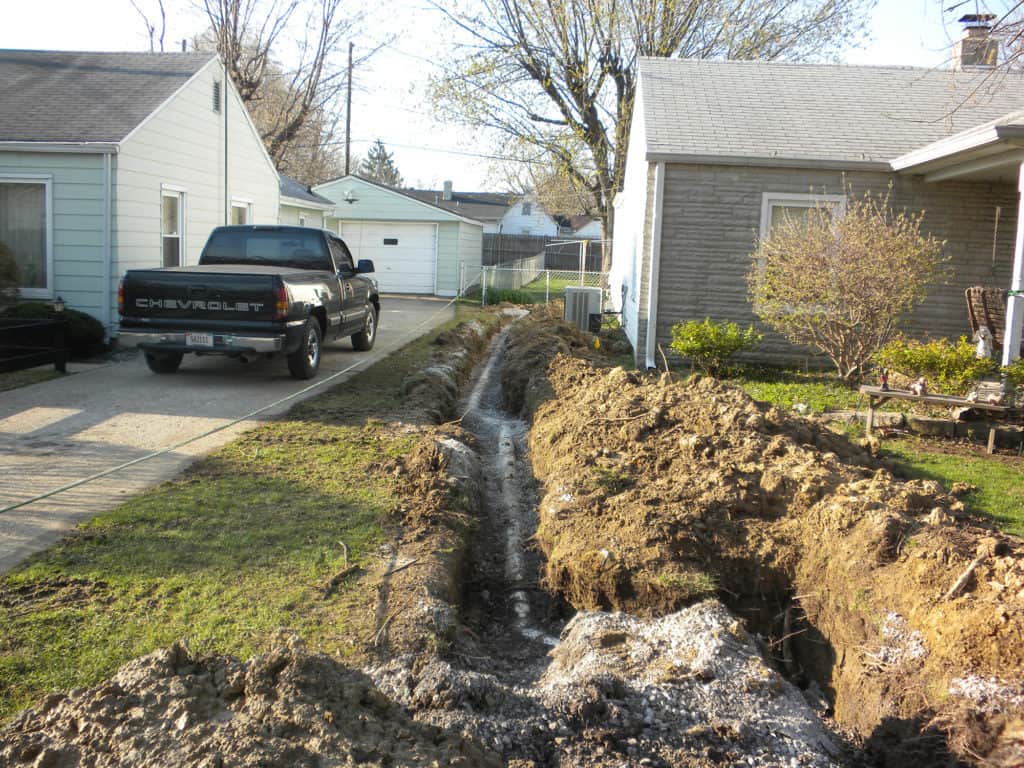
In cases where a pipe has completely collapsed or has a severe “belly,” traditional excavation may still be necessary. Skilled contractors can perform targeted digging to replace only the damaged sections, followed by proper soil compaction and site restoration.
Frequently Asked Questions (FAQs)
How do I know if my sewer line is bad?
Common signs include recurring backups in multiple fixtures, foul sewage odors in the basement or yard, gurgling sounds from your drains, and unusually lush patches of grass in your lawn.
Can tree roots be removed without replacing the pipe?
If the pipe is structurally sound, high-pressure water jetting or mechanical root cutting can clear the blockage. However, since roots seek moisture, they will eventually return unless the pipe is repaired or sealed.
Is sewer line damage covered by my NJ homeowners insurance?
Standard policies often exclude the sewer lateral. Many NJ homeowners choose to add a “service line endorsement” to their policy to cover these unexpected and high-cost repairs.
How long does a typical sewer line replacement take?
Most residential sewer line repairs can be completed in 1 to 3 days, depending on the line’s depth and the repair method used (trenchless vs. traditional).
What is the most common cause of sewer failure in North Jersey?
Aging infrastructure combined with the region’s hilly terrain and high concentration of mature trees makes tree root intrusion and soil shifting (due to freeze-thaw cycles) the most frequent causes.
Contact the New Jersey Sewer Experts
If you are experiencing slow drains or suspect a sewer line issue, don’t wait for a total backup. Early intervention is key to protecting your property and avoiding environmental contamination.
BRUTE Contracting
Phone: (201) 581-3740
Email: info@brutecontracting.com
Service Area: All of New Jersey, specializing in Northern NJ