

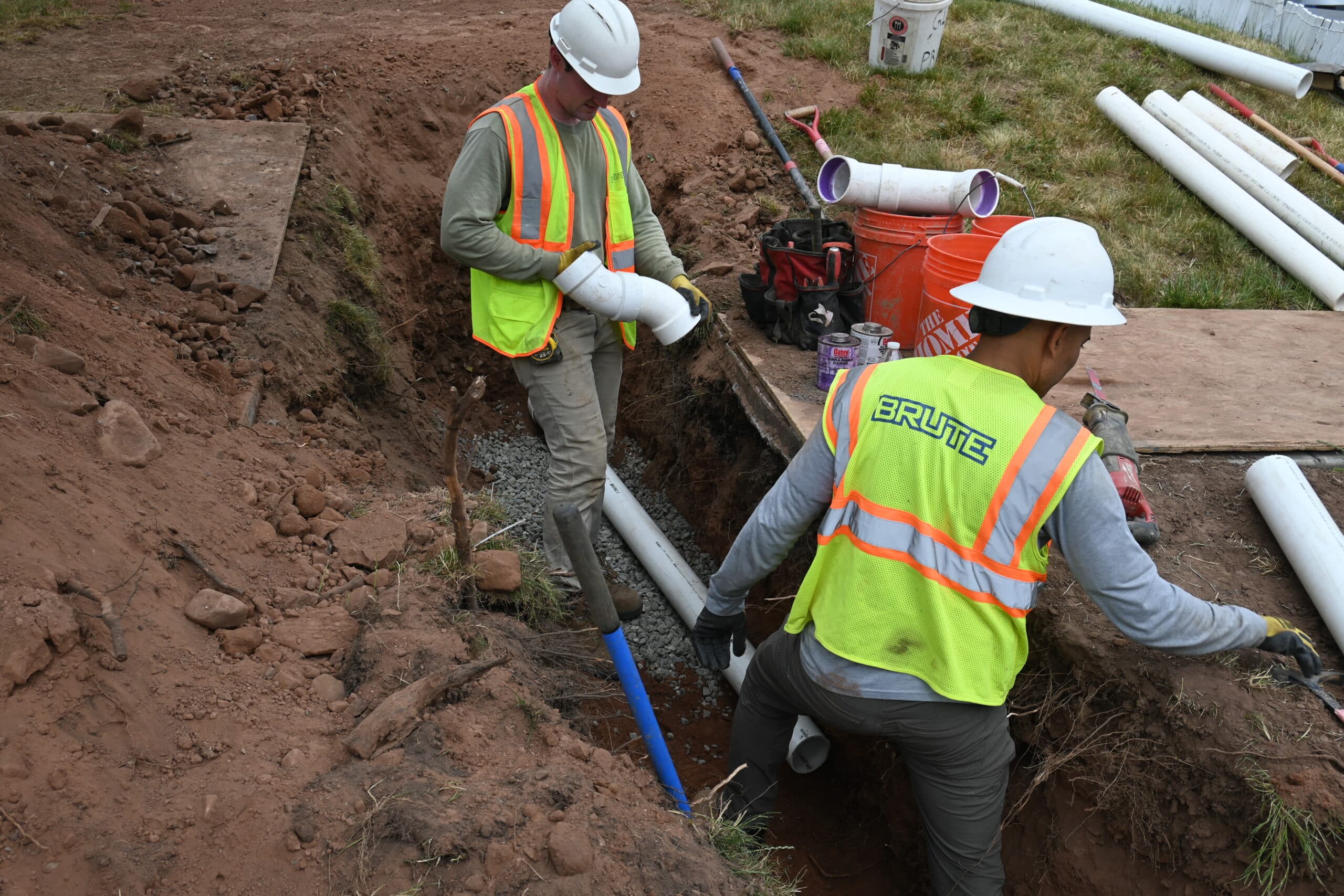
Understanding the Average Cost of Sewer Line Replacement in NJ
In 2026, residential sewer line replacement in New Jersey commonly falls within a broad estimated range of $3,000 to $25,000, depending on the complexity of the project. Some straightforward replacements cost less, while projects requiring extensive excavation, roadway access, or restoration can exceed that range.
For many typical residential sewer lateral projects, homeowners may encounter estimates between approximately $5,000 and $20,000. However, no single price applies to every property.
Here is a general breakdown of estimated costs:
| Sewer Line Service | Estimated 2026 Cost |
|---|---|
| Sewer Camera Inspection | $250–$650 |
| Minor Sewer Line Spot Repair | $1,500–$5,000 |
| Traditional Sewer Line Replacement | $3,000–$15,000 |
| Trenchless Sewer Line Replacement | $4,000–$20,000 |
| Full Replacement With Complex Excavation and Restoration | $10,000–$25,000+ |
| Sewer Line Replacement Per Linear Foot | $50–$250 |
These are approximate planning ranges compiled from published 2026 industry estimates, not BRUTE Contracting’s quoted prices. Costs vary by property, and some figures exclude permits, restoration, and other expenses.
One of the biggest mistakes homeowners make is assuming that replacing a sewer line involves simply purchasing new pipe and installing it underground.
In reality, sewer line replacement often involves locating underground utilities, evaluating existing pipe conditions, obtaining permits, excavating soil, removing damaged materials, installing new piping, testing connections, and restoring affected areas.
Understanding these components makes it easier to evaluate a contractor’s estimate and determine whether the proposed work addresses the underlying problem.
What Factors Affect Sewer Line Replacement Costs in New Jersey?
Several important factors determine the final cost of replacing an underground sewer line.
1. Length of the Sewer Line
The distance between your home and the municipal sewer connection is one of the most significant pricing factors.
A property with a 30-foot sewer lateral may require considerably less material and labor than a property with a 100-foot sewer line.
Longer sewer lines generally involve more piping, excavation, equipment time, and installation labor.
However, the relationship between pipe length and cost is not always proportional. A shorter line beneath a concrete driveway may cost more to replace than a longer line running through an open lawn.
2. Depth of the Underground Sewer Pipe
Sewer lines are installed at varying depths depending on property elevation, local infrastructure, and the original construction.
Deeper sewer pipes can require more extensive excavation, additional safety measures, specialized equipment, and increased labor.
For example, replacing a sewer line buried four feet underground may be considerably easier than replacing one located ten feet below the surface.
Excavation depth can also influence whether trenchless replacement is practical.
3. Soil Conditions and Underground Obstacles
New Jersey properties can have very different underground conditions.
Some locations have relatively manageable soil, while others contain dense clay, rocks, groundwater, or buried construction materials.
Unexpected obstacles can increase the time required to complete the replacement.
Contractors must also identify nearby utilities, including gas, electric, water, and telecommunications lines.
These underground systems may restrict excavation methods or require additional precautions.
4. Location of the Damaged Sewer Line
The position of the sewer line can significantly affect replacement costs.
A damaged pipe running beneath an open lawn is generally easier to access than one beneath a driveway, patio, retaining wall, sidewalk, or roadway.
When excavation affects permanent structures, homeowners may need to account for additional restoration expenses.
In some situations, trenchless sewer line replacement can help reduce disruption by limiting the amount of digging required.
5. Sewer Pipe Material
The material used in the existing sewer line can influence the recommended replacement method.
Older New Jersey homes may have sewer lines constructed from materials such as:
- Cast iron
- Clay
- Orangeburg pipe
- Older plastic piping
Modern replacement projects commonly use approved plastic sewer piping, although the appropriate material depends on local requirements and installation conditions.
The condition of the existing pipe determines whether a localized repair, pipe lining, pipe bursting, or traditional replacement is appropriate.
6. Municipal Permits and Inspections
Sewer line replacement may require municipal approvals, particularly when work affects public property, roadways, easements, or connections to municipal infrastructure.
Permit requirements and fees vary by municipality.
Some projects also require plumbing inspections, roadway opening permits, or coordination with local sewer authorities.
A qualified sewer contractor can help determine which approvals apply before construction begins.
Traditional Sewer Line Replacement vs. Trenchless Sewer Line Replacement
One of the most important decisions affecting the overall cost is the replacement method.
New Jersey homeowners generally have two primary options: traditional excavation and trenchless sewer line replacement.
Both methods can provide reliable results when properly selected and installed.
Traditional Sewer Line Replacement
Traditional sewer line replacement involves excavating a trench to expose the damaged underground pipe.
Once the existing sewer line is accessible, the contractor removes the deteriorated sections, installs new piping, establishes the proper connections, and backfills the excavation.
This method is often necessary when the existing pipe has collapsed, shifted significantly, or developed serious alignment problems.
Advantages of traditional sewer line replacement:
- Provides direct access to the damaged pipe
- Allows contractors to correct serious alignment or grading issues
- Accommodates severely collapsed sewer lines
- Makes it possible to replace sections with extensive structural damage
- Can be practical when the sewer line is located beneath accessible ground
The primary disadvantage is the potential disruption to landscaping, driveways, sidewalks, and other surface features.
For homeowners with expensive hardscaping or mature landscaping, restoration costs may represent a substantial portion of the project.
Trenchless Sewer Line Replacement
Trenchless sewer line replacement uses specialized methods to repair or replace underground sewer piping while reducing the need for continuous open-trench excavation.
Two commonly discussed trenchless techniques are pipe bursting and cured-in-place pipe lining.
Pipe Bursting
Pipe bursting involves pulling a new pipe through the path of the existing sewer line while a specialized bursting head fractures or displaces the old pipe.
This method can provide a complete replacement without excavating the entire length of the sewer line.
Access pits are generally required, and the existing pipe alignment and surrounding utility conditions must be suitable.
Cured-in-Place Pipe Lining
Cured-in-place pipe lining, commonly called CIPP, involves installing a resin-saturated liner inside an existing pipe and curing it to create a new internal pipe structure.
Unlike pipe bursting, CIPP rehabilitates the existing pipe rather than replacing it with a separately installed pipe along the same route.
It is not appropriate for every type of damage, particularly severe collapses or conditions that prevent proper liner installation.
Advantages of trenchless sewer line methods:
- Less extensive surface excavation
- Reduced disturbance to landscaping
- Potentially lower driveway and sidewalk restoration costs
- Fewer open trenches across the property
- Efficient installation when conditions are suitable
Although trenchless methods can have higher installation costs per linear foot, they may reduce the overall project expense when restoration costs are included.
Is Trenchless Sewer Line Replacement Cheaper Than Traditional Excavation?
Not necessarily.
The answer depends on the property and the condition of the existing sewer system.
Traditional excavation may be more economical when the damaged pipe is shallow and located beneath an open lawn.
However, if the sewer line runs beneath a decorative driveway, expensive landscaping, or a large patio, trenchless replacement may offer a financial advantage.
Consider two hypothetical scenarios.
Scenario A: Sewer Line Beneath an Open Lawn
A homeowner needs to replace 40 feet of sewer pipe running through an accessible yard.
Traditional excavation may be the most practical solution because restoration requirements are relatively limited.
Scenario B: Sewer Line Beneath a Paver Driveway
Another homeowner needs to replace 60 feet of sewer line running beneath a decorative paver driveway and established landscaping.
Although trenchless installation may have a higher initial price, avoiding extensive driveway reconstruction could reduce total project costs.
These examples demonstrate why homeowners should compare complete estimates rather than focusing exclusively on the price per linear foot.
How Do You Know If Your Sewer Line Needs Replacement?
Not every sewer problem requires a complete replacement.
Some issues can be resolved through cleaning, localized repairs, or other appropriate methods.
However, certain warning signs may indicate serious underground pipe deterioration.
Frequent Sewer Backups
Recurring sewage backups are among the clearest signs that something is wrong with the sewer system.
If multiple plumbing fixtures back up repeatedly, the problem may involve the main sewer lateral rather than an individual drain.
Recurring backups should be professionally investigated before additional damage occurs.
Multiple Slow Drains
A single slow drain often indicates a localized clog.
However, when sinks, showers, bathtubs, and toilets all begin draining slowly, the issue may involve a larger sewer line obstruction.
Persistent problems affecting multiple fixtures warrant a closer inspection.
Sewage Odors Around Your Property
Unpleasant sewage odors near your yard, basement, or plumbing fixtures can indicate damaged piping, blocked vents, or other drainage problems.
An underground sewer leak may allow wastewater to escape into surrounding soil.
Because sewage can create sanitation hazards, unexplained odors should not be ignored.
Unusually Wet Areas in Your Yard
A damaged sewer pipe can sometimes cause moisture to accumulate in the surrounding soil.
Homeowners may notice persistent wet patches, unusually lush vegetation, or localized ground settlement.
However, these symptoms can also result from irrigation leaks, drainage problems, or other underground utilities.
Professional testing is necessary to identify the source.
Repeated Tree Root Intrusion
Tree roots can enter sewer lines through cracks, deteriorated joints, or other openings.
Once inside, roots may expand and contribute to recurring blockages.
Cleaning can restore flow temporarily, but it does not necessarily correct the opening that allowed the roots to enter.
If root intrusion continues, repairing or replacing the affected pipe may provide a more durable solution.
Cracked, Collapsed, or Severely Deteriorated Pipes
Sewer camera inspections can reveal structural problems such as cracks, displaced joints, collapsed sections, and severe deterioration.
When damage affects a substantial portion of the line, full replacement may be more practical than repeated localized repairs.
Why Older New Jersey Homes May Need Sewer Line Replacement
Many communities throughout Bergen, Essex, Hudson, Morris, Passaic, and Union counties contain homes built decades ago.
While older homes often feature attractive architecture and established neighborhoods, their underground plumbing infrastructure may be approaching or exceeding its expected service life.
Some properties still have original sewer piping.
Over time, underground pipes can deteriorate due to corrosion, ground movement, root intrusion, soil conditions, and normal wear.
Older clay pipes, for example, may develop problems at their joints.
Cast iron piping can corrode over time, while certain obsolete pipe materials are particularly vulnerable to deformation and deterioration.
A sewer line does not automatically need replacement simply because it is old.
However, aging infrastructure combined with repeated backups, visible damage, or significant structural defects may justify a professional evaluation.
For homeowners purchasing an older New Jersey property, a sewer camera inspection can also provide valuable information before closing.
Does Homeowners Insurance Cover Sewer Line Replacement in New Jersey?
Homeowners frequently assume their insurance policy will cover sewer line replacement.
Unfortunately, coverage is not automatic.
Many standard homeowners insurance policies exclude damage caused by gradual deterioration, corrosion, ordinary wear, and maintenance-related problems.
Some insurers offer optional service line coverage that may help pay for qualifying damage to underground utility connections.
Coverage depends on the specific policy, endorsements, cause of damage, deductibles, and applicable exclusions.
Homeowners should review their insurance documents and contact their insurance provider before assuming a replacement project is covered.
It is also important to distinguish between coverage for damage to the underground sewer line and coverage for resulting sewage damage inside the home.
These may be addressed by different policy provisions.
Who Is Responsible for Sewer Line Replacement in New Jersey?
Responsibility for sewer lateral maintenance and replacement depends on the municipality and the location of the damaged pipe.
In many New Jersey communities, property owners are responsible for maintaining some or all of the sewer lateral connecting their home to the municipal sewer system.
However, responsibility for sections beneath public streets, municipal easements, or other public property varies.
For example, a municipality may maintain the public sewer main while homeowners remain responsible for their private lateral.
Before authorizing replacement, homeowners should confirm the applicable ownership and maintenance rules with their municipality or sewer authority.
Determining responsibility early can prevent disputes and unnecessary expenses.
How Long Does Sewer Line Replacement Take?
The time required to replace a sewer line depends on the scope of the project.
Some straightforward residential replacements can be completed within one to three working days after necessary approvals are obtained.
More complex projects may take longer.
Factors affecting the timeline include:
- Length and depth of the pipe
- Excavation requirements
- Underground utility locations
- Weather and soil conditions
- Municipal inspections
- Roadway access restrictions
- Driveway and landscape restoration
Trenchless methods may reduce the amount of excavation and surface restoration required.
However, permitting, inspections, and utility coordination can affect the overall project schedule regardless of the installation method.
Homeowners should ask their contractor for an estimated timeline and whether sewer service will be temporarily interrupted.
Can You Repair a Sewer Line Instead of Replacing It?
Yes. In some situations, a targeted sewer line repair may be sufficient.
For example, a sewer camera inspection may reveal that the majority of the pipe remains in good condition, with only one damaged joint or isolated crack.
A localized repair may resolve the problem without replacing the entire sewer lateral.
However, if the pipe has widespread corrosion, multiple collapses, severe joint displacement, or recurring failures, replacing the line may provide better long-term value.
The decision should be based on the actual condition of the sewer pipe rather than its age alone.
A reputable contractor should explain the available options and why a particular approach is recommended.
What Happens During a Professional Sewer Line Replacement?
Understanding the replacement process can help homeowners prepare for the project.
Step 1: Initial Sewer Line Evaluation
The contractor reviews the reported symptoms, property conditions, and available information about the existing sewer system.
The evaluation helps determine whether further inspection or immediate corrective action is necessary.
Step 2: Sewer Camera Inspection
A sewer camera inspection can reveal blockages, cracks, root intrusion, offset joints, and other visible defects.
The inspection may also help identify the approximate location of damaged sections.
Depending on site conditions, additional locating equipment or testing may be necessary.
Step 3: Determine the Appropriate Replacement Method
The contractor evaluates whether traditional excavation, pipe bursting, pipe lining, or localized repair is suitable.
Factors include pipe condition, alignment, accessibility, and local regulations.
Step 4: Obtain Necessary Permits
Before excavation or replacement begins, applicable permits and municipal approvals must be obtained.
Required utility markouts and other safety preparations should also be completed.
Step 5: Complete the Sewer Line Work
The contractor performs the approved repair or replacement using the selected method.
Proper pipe alignment, connections, and installation practices are essential for reliable drainage.
Step 6: Testing and Inspection
Once the new or rehabilitated sewer line is installed, the work may require testing and inspection to verify that it meets applicable requirements.
Step 7: Backfilling and Property Restoration
Excavated areas are backfilled and restored according to the project scope.
Homeowners should confirm whether landscaping, paving, concrete, and other restoration work are included in the contractor’s estimate.
How Can New Jersey Homeowners Avoid Unexpected Sewer Replacement Costs?
Although sewer line replacement can be expensive, careful planning can help reduce unexpected expenses.
Schedule an inspection before approving major work. Understanding the condition of the existing sewer line helps establish whether repair or replacement is necessary.
Request a detailed written estimate. The proposal should clearly explain the work being performed, materials, installation method, and anticipated additional costs.
Compare complete project costs. A lower initial price may not include permits, restoration, or other essential services.
Ask about trenchless alternatives. If your property has expensive landscaping or hardscaping, a trenchless solution may be worth evaluating.
Avoid repeatedly postponing serious problems. Continued backups and underground leaks can contribute to additional property damage.
Understand your insurance coverage. Reviewing applicable service line endorsements before a problem occurs can help clarify your financial exposure.
Most importantly, choose a contractor experienced in underground sewer infrastructure rather than relying solely on the lowest estimate.
Why Choose BRUTE Contracting for Sewer Line Replacement in New Jersey?
When an underground sewer line fails, choosing the right contractor is just as important as selecting the appropriate replacement method.
At BRUTE Contracting, we specialize in underground sewer and water main services for residential and commercial properties throughout Northern New Jersey.
Our experience with sewer infrastructure allows us to evaluate underground conditions and recommend solutions based on the requirements of each property.
Experienced Sewer and Water Main Contractors
With more than 20 years of industry experience, BRUTE Contracting understands the challenges associated with underground sewer line repairs, replacements, and installations.
Our team works with homeowners and businesses to address sewer infrastructure problems efficiently and professionally.
Traditional and Trenchless Sewer Line Solutions
Every property is different.
Some sewer lines require traditional excavation, while others may be suitable for trenchless replacement.
BRUTE Contracting provides both traditional and trenchless sewer line services, allowing us to evaluate appropriate options for your project.
Professional Equipment and Installation
Underground sewer work requires specialized equipment, careful planning, and proper installation practices.
Our team uses professional equipment designed for sewer and water main projects.
Licensed and Insured Contractors
BRUTE Contracting is a licensed and insured contractor committed to professional workmanship and dependable service.
Financing Options Available
Unexpected sewer line replacement costs can place financial pressure on homeowners.
BRUTE Contracting offers financing options for qualifying customers, subject to approval and applicable terms.
Serving Northern New Jersey Communities
BRUTE Contracting serves residential and commercial customers throughout:
- Bergen County, NJ
- Essex County, NJ
- Hudson County, NJ
- Morris County, NJ
- Passaic County, NJ
- Union County, NJ
Whether you are experiencing recurring sewer backups or need a complete underground sewer line replacement, our team can help evaluate your options.
Frequently Asked Questions About Sewer Line Replacement Costs in New Jersey
1. What Is the Average Cost to Replace a Sewer Line in New Jersey?
Residential sewer line replacement in New Jersey often costs approximately $3,000 to $25,000, depending on pipe length, depth, accessibility, replacement method, and restoration requirements. Many standard projects fall within a narrower range, but a site-specific inspection is necessary for an accurate estimate.
2. Is Trenchless Sewer Line Replacement Worth the Money?
Trenchless sewer line replacement can be worthwhile when traditional excavation would damage driveways, patios, landscaping, or other expensive surface features. Although trenchless methods may cost more per linear foot, reduced restoration expenses can make them competitive overall. Not every sewer line qualifies for trenchless replacement.
3. How Long Does a New Sewer Line Last?
A properly installed modern sewer line can provide decades of service. Some approved plastic piping systems have expected service lives of 50 years or longer under suitable conditions. Actual longevity depends on pipe material, installation quality, soil movement, loading, maintenance, and other environmental factors.
4. Do I Need a Permit to Replace My Sewer Line in New Jersey?
Many sewer line replacement projects require plumbing permits, sewer authority approvals, or additional municipal permits. Requirements vary by town and by whether the work affects private property, public streets, or municipal easements. Homeowners should confirm the requirements with their municipality before work begins.
5. Can Tree Roots Cause a Sewer Line to Need Replacement?
Yes. Tree roots can enter existing cracks or deteriorated pipe joints and contribute to recurring blockages or structural damage. While root removal may temporarily restore drainage, a damaged pipe may require repair or replacement to address the underlying entry points.
6. Can a Sewer Line Be Replaced Without Digging Up My Yard?
In some cases, yes. Trenchless methods such as pipe bursting can replace underground sewer lines with substantially less excavation than traditional open-trench methods. However, access pits are generally required, and the condition and alignment of the existing sewer pipe must be suitable.
7. How Do I Get an Accurate Sewer Line Replacement Estimate?
The best approach is to schedule a professional sewer line evaluation. A contractor can assess the pipe’s condition, determine the approximate length and depth, evaluate access requirements, and explain suitable repair or replacement options. A written estimate should identify the included work and potential additional expenses.
Get a Free Sewer Line Assessment From BRUTE Contracting
If you’re experiencing recurring sewer backups, slow drains, underground pipe damage, or other sewer problems, don’t wait until the situation becomes more serious.
At BRUTE Contracting, we provide professional sewer line repair and replacement services throughout Northern New Jersey.
Our team can evaluate your sewer system, explain available replacement methods, and help you understand the factors affecting your project’s cost.
Whether your property requires traditional excavation or qualifies for trenchless sewer line replacement, we are committed to providing dependable solutions tailored to your needs.
Contact BRUTE Contracting today to schedule your free sewer line assessment.
Call (201) 581-3740
Visit: https://brutecontracting.com/
BRUTE Contracting: New Jersey’s Sewer and Water Main Experts.