


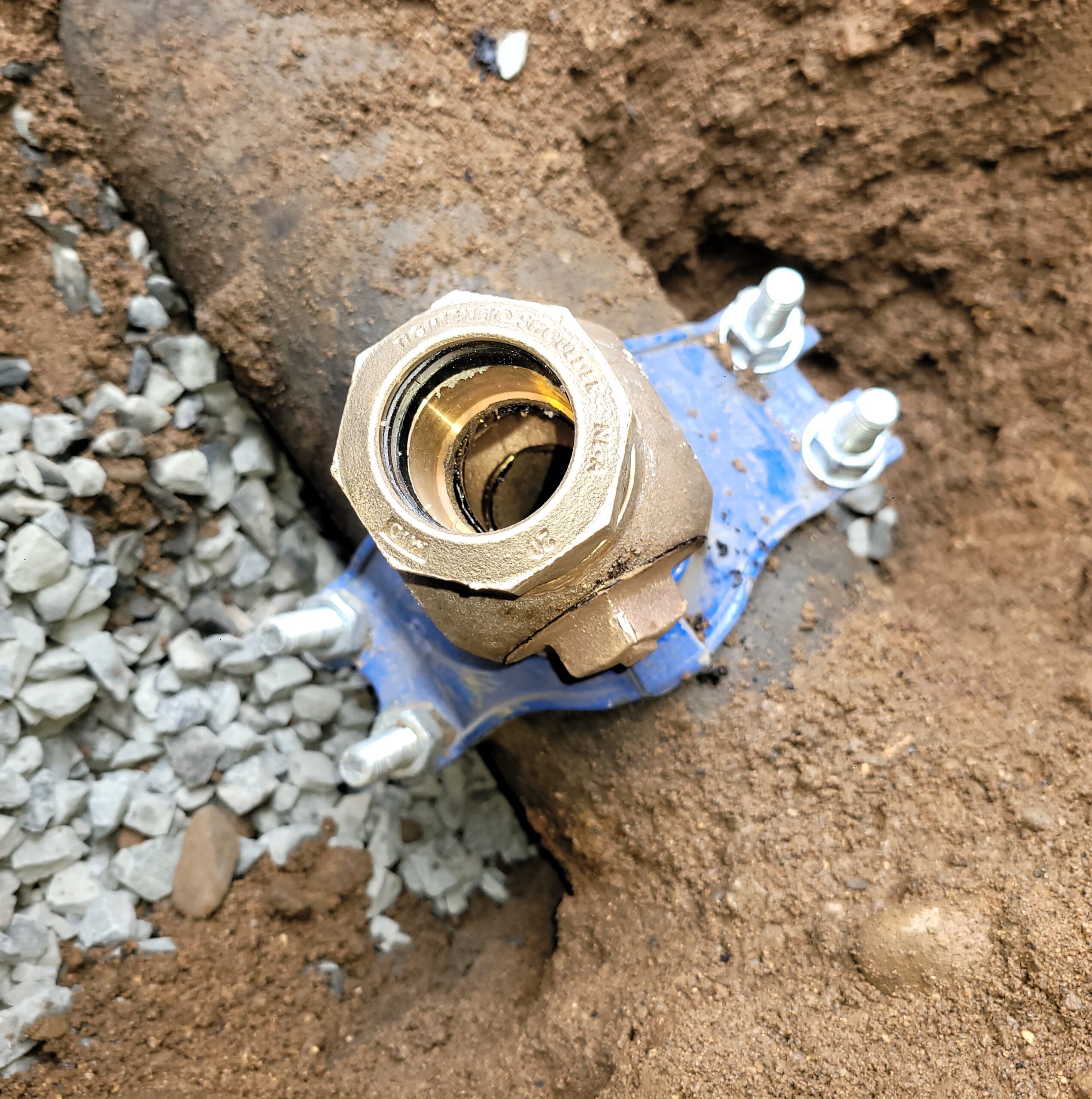
A leaking or broken main water line can quickly become a serious problem for any New Jersey property owner. It can reduce water pressure, increase monthly water bills, flood a yard, damage a driveway, and even threaten a home’s foundation. Once the problem is discovered, one of the first questions most homeowners ask is, “Who is responsible for repairing the main water line?”
In most New Jersey communities, responsibility depends on where the damage is located. The water company or municipality generally maintains the public water main and the portion of the service line extending from the public main to the curb stop. The property owner is usually responsible for the private water service line running from the curb stop or property line to the home or building.
However, responsibility is not identical in every municipality or water system. Local ordinances, utility tariffs, service agreements, property records, lead service line programs, and the exact location of the leak can all affect who must arrange and pay for the repair.
If you suspect a problem with the water line leading to your property, BRUTE Contracting can inspect the situation, identify the likely location of the damage, and explain your water line repair options. We provide professional main water line repair services throughout Northern and Central New Jersey.
What Is a Main Water Line?
The term “main water line” is often used to describe two different parts of a water distribution system.
The public water main is the large pipe that carries treated water through a municipality. It is usually located beneath a street, public right of way, or utility easement. The municipality or water company typically owns and maintains this pipe.
A water service line is the smaller underground pipe that connects the public water main to an individual home, commercial property, or other building. This is the pipe that delivers water directly to the property.
A typical water service connection may include:
- The public water main
- A connection or tap at the public main
- The utility-owned section of the service line
- A curb stop or shutoff valve
- The privately owned water service line
- A water meter
- Interior plumbing and shutoff valves
Determining which part of this system has failed is essential because ownership and repair responsibilities often change at the curb stop, curb line, property line, or another location established by the water provider.
Who Is Usually Responsible for a Water Line Repair in New Jersey?
In many New Jersey water systems, responsibility is divided at the curb stop or curb line.
The water utility is generally responsible for:
- The public water main
- The connection between the public main and utility-owned service piping
- The utility-owned portion of the water service line
- The curb stop in systems where it is considered utility property
- Utility-owned meters and related equipment
The property owner is generally responsible for:
- The water service line from the curb stop or curb line to the building
- Water lines located on private property
- Interior plumbing
- Customer-owned valves
- Pressure-reducing valves
- Repairs caused by damage to privately owned piping
- Excavation and property restoration associated with a private service line repair
For example, New Jersey American Water states that its company water service line generally extends from the public water main to the curb stop or curb line. The customer owns and maintains the service line extending from that point to the building. Other municipal systems, including the Merchantville-Pennsauken Water Commission, describe a similar division of responsibility. New Jersey American Water, Merchantville-Pennsauken Water Commission
This arrangement is common, but it should not be assumed without checking with the water provider. A municipal water department may use a property line, curb box, meter, corporation stop, or another point as the official boundary of responsibility.
Where Is the Curb Stop?
The curb stop is an underground valve that controls water service to an individual property. It is generally located near the curb, sidewalk, or property line and is accessed through a small curb box extending to ground level.
The water company may use this valve to turn water service on or off. It can also help separate the public portion of the system from the customer-owned water service line.
Finding the curb stop is an important step when investigating a suspected leak. If water is escaping on the street side of the curb stop, the repair may be the utility’s responsibility. If the leak is between the curb stop and the house, the property owner will often be responsible.
The curb stop should generally be operated only by an authorized water utility representative or qualified professional. Attempting to operate an old, corroded, or damaged valve can make the problem worse.
What If the Leak Is Under the Street?
A leak located beneath a street is not automatically the water company’s responsibility.
Ownership depends on the utility’s established boundary, not simply whether the pipe is under public pavement. In some communities, the customer-owned section of a service line may extend through an area that appears to be public property. Easements, road layouts, curb locations, and local regulations can complicate the determination.
The first step should be contacting the water provider. The utility may inspect the area, check its system, operate the curb stop, or determine whether the suspected leak is on the public or private side.
If the failed pipe belongs to the property owner, repairing it may require:
- Municipal permits
- Road-opening approval
- Utility coordination
- Traffic control
- Underground utility marking
- Excavation
- Pipe repair or replacement
- Soil compaction
- Pavement, sidewalk, driveway, or landscaping restoration
Because these projects involve buried utilities and public infrastructure, they should be handled by an experienced and properly insured water and sewer contractor.
What If the Public Water Main Breaks?
A public water main break is normally the responsibility of the municipality, public authority, or private utility that owns the water distribution system.
Signs of a public water main break may include:
- A large amount of water flowing through a street
- Flooding that affects several properties
- A sudden loss of water pressure throughout a neighborhood
- Discolored water reported by multiple homes
- Road damage or pavement beginning to collapse
- Utility crews working near a public water main
- A boil-water advisory or service interruption notice
Contact the local water provider immediately if you suspect a public water main break. Do not enter a flooded roadway or approach a sinkhole. Flowing water can erode the soil beneath pavement and create unstable ground that is difficult to see from the surface.
Even when the public utility repairs the main, property owners may still need to inspect their private service lines. Pressure changes, soil movement, or an existing weakness in an older private pipe can sometimes contribute to a separate problem.
How Can You Tell Which Side Is Leaking?
The exact location of an underground water leak is not always obvious. Water can travel through loose soil, pipe trenches, gravel, and utility channels before appearing at the surface.
A puddle beside a house does not necessarily mean the pipe broke directly beneath that spot. Likewise, water appearing near a curb could originate farther onto the property.
Common signs of a private main water line leak include:
- An unexplained increase in the water bill
- Low water pressure throughout the property
- Wet or unusually soft areas in the yard
- Water flowing when all fixtures are turned off
- The sound of running or hissing water
- Cracks or settlement near a driveway or walkway
- Mold or moisture near the foundation
- Discolored, cloudy, or unusual-tasting water
- A water meter that continues moving when no water is being used
- A sudden loss of reliable water service
A contractor may use several methods to investigate the problem, including visual inspection, pressure testing, meter observations, acoustic equipment, soil evaluation, and controlled excavation.
Accurate diagnosis is important. Digging in the wrong area adds unnecessary labor, restoration expenses, and disruption without solving the actual problem.
What Should You Do When You Discover a Possible Water Line Leak?
Act quickly, but do not begin digging without knowing what utilities are located below the ground.
1. Turn Off Water Fixtures
Confirm that faucets, toilets, irrigation systems, washing machines, and other water-using appliances are not running. Then check whether the water meter continues to register usage.
2. Contact Your Water Provider
Report the suspected leak and ask the utility to explain its ownership boundary. The provider may inspect the public side, verify the curb stop location, and tell you whether the issue appears to involve customer-owned piping.
3. Protect the Property
Keep people and vehicles away from saturated soil, sinking pavement, or other unstable areas. Move valuable belongings away from any interior water intrusion.
4. Contact an Experienced Contractor
If the leak is on the customer-owned portion, arrange for a professional main water line inspection as soon as possible. Waiting can allow a small leak to become a major excavation and property damage problem.
5. Confirm Permit Requirements
Water line repairs may require plumbing permits, road-opening permits, inspections, utility coordination, or approvals from the municipality.
6. Call Before Digging
New Jersey requires anyone planning excavation to contact the New Jersey One Call Center before digging. NJBPU advises property owners and contractors to call 811 or 1-800-272-1000 and provide the required notice so underground utilities can be marked. New Jersey Board of Public Utilities
BRUTE Contracting can help property owners understand the excavation and repair process and coordinate the work required for a professional water line solution.
Does Homeowners Insurance Cover Main Water Line Repairs?
Standard homeowners insurance does not always cover the cost of repairing or replacing a damaged underground water service line.
Coverage varies based on:
- The cause of the damage
- The location of the pipe
- The language in the insurance policy
- Whether the policy includes service line coverage
- Whether the damage resulted from wear, corrosion, freezing, roots, ground movement, or an unexpected event
- Whether the claim involves the pipe itself, resulting property damage, or both
Some insurers offer optional service line coverage for underground water, sewer, electrical, and communication lines. This endorsement may help cover excavation, pipe repair, and restoration, subject to policy limits and exclusions.
A policy might cover resulting damage inside the home while excluding the cost of repairing the deteriorated pipe that caused it. It may also exclude damage associated with gradual wear, poor maintenance, or preexisting conditions.
Contact your insurance company before authorizing nonemergency work, when practical. Ask specifically about underground service line coverage, excavation expenses, landscaping restoration, driveway repairs, deductibles, and documentation requirements.
BRUTE Contracting cannot determine whether a particular claim is covered, but we can provide information about the observed water line problem and proposed repair for you to discuss with your insurer.
Is the Municipality Responsible for Damage to Your Property?
When a municipality or utility owns the failed pipe, that does not automatically mean it will pay for every type of damage to private property.
Responsibility may depend on:
- Who owned the failed pipe
- What caused the failure
- Whether negligence occurred
- The applicable municipal rules
- Utility tariffs
- Governmental immunities
- Notice requirements
- Insurance coverage
- The specific facts surrounding the incident
If a public water main break damages your basement, landscaping, driveway, or other property, document the damage immediately. Take photographs and videos, retain receipts, report the event to the water provider, and notify your insurance company.
For a significant loss or disputed responsibility, consider consulting a qualified New Jersey attorney. A water line contractor can diagnose and repair the physical problem but cannot provide legal advice about liability.
Who Pays for a Lead Water Service Line Replacement?
Lead service lines are subject to special public health laws and replacement programs. Responsibility for arranging or funding a lead line replacement may differ from the rules that apply to an ordinary leak in a copper, plastic, or other service pipe.
The New Jersey Department of Environmental Protection explains that a lead service line may be owned by the public water system, the property owner, or both. Property owners may be responsible for the cost of their portion in certain circumstances, but funding programs and utility-led replacement projects can affect the final cost. NJDEP Lead Service Line Replacement Requirements
New Jersey has required public community water systems to inventory service lines and work toward replacing lead service lines. Depending on the system and project, replacement costs may be supported through utility programs, public financing, grants, or rate-based recovery.
If you receive a notice stating that your service line contains lead, galvanized material requiring replacement, or an unknown material, do not ignore it. Contact the water provider to ask:
- Which portion of the line is affected?
- Who owns each portion?
- Is a replacement already scheduled?
- Is funding available?
- Will the replacement include the entire service line?
- Does the property owner need to provide access or authorization?
- What interior plumbing work may be required?
- Who is responsible for restoring the property?
Replacing only part of a lead service line may not provide the intended long-term benefit. Coordination between the property owner, water provider, municipality, and contractor is essential.
Can a Landlord Make a Tenant Pay for the Repair?
The property owner is generally responsible for maintaining the building and its privately owned water service line. Whether a landlord can pass a particular expense to a commercial or residential tenant depends on the lease, the cause of the damage, and applicable New Jersey law.
A residential tenant should report low pressure, discolored water, wet areas, or a loss of service to the landlord immediately and keep a written record of the notification.
Commercial leases can assign maintenance responsibilities differently. Some require tenants to maintain particular utility connections or reimburse the owner for specific repairs.
Landlords and tenants should review the lease and obtain legal guidance when responsibility is disputed. Regardless of who ultimately pays, an active leak should be addressed promptly to reduce property damage and avoid an extended water interruption.
Repairing vs. Replacing a Main Water Line
Not every damaged water service line requires complete replacement. A localized repair may be appropriate when:
- The damage is confined to one accessible area
- The rest of the pipe is in good condition
- The pipe material remains acceptable
- The line has not experienced repeated leaks
- The repair will provide a reliable long-term solution
Replacement may make more sense when:
- The line is old or severely corroded
- Multiple leaks have occurred
- The pipe contains lead or another problematic material
- Water pressure is restricted throughout the line
- The pipe has widespread mineral buildup
- Tree roots or soil movement have damaged multiple sections
- The cost of repeated excavation is becoming excessive
- Local codes require an upgrade
The right recommendation should consider the pipe’s material, age, condition, diameter, location, repair history, water pressure, excavation needs, and expected service life.
A low initial repair price is not always the most economical option. If another section of an aging pipe is likely to fail soon, replacing the complete private service line may reduce long-term expense and disruption.
What Can Cause a Main Water Line to Fail?
Underground water lines are durable, but they do not last forever. Common causes of failure include:
Corrosion
Metal pipes can corrode over time. Corrosion may thin the pipe wall, restrict water flow, create pinhole leaks, and eventually cause a larger break.
Aging Materials
Older homes may have lead, galvanized steel, or other outdated service line materials. Even a well-installed pipe can reach the end of its useful life.
Freezing Conditions
Insufficient burial depth, severe cold, poor insulation, or unusual exposure can allow a water line to freeze. Expanding ice can crack pipes and fittings.
Soil Movement
Erosion, settling, construction, heavy traffic, and changes in soil moisture can place stress on underground piping.
Tree Roots
Roots generally enter pipes through existing weaknesses rather than breaking sound water lines from the inside. However, growing roots and shifting soil can exert pressure on a buried service line.
Improper Installation
Poor bedding, unsuitable fittings, incorrect pipe sizing, inadequate depth, and low-quality connections can lead to premature failure.
Accidental Excavation Damage
Construction, fence installation, landscaping, and other digging activities can damage underground water lines. Calling 811 before excavation helps identify buried utilities and reduce this risk.
High Water Pressure
Excessive or fluctuating pressure can stress pipes, fittings, valves, and interior plumbing components.
Why Prompt Water Line Repair Matters
An underground leak may seem manageable when water service is still available, but the damage can increase quickly.
Delaying repair can result in:
- Higher water bills
- Wasted drinking water
- Reduced water pressure
- Yard flooding
- Soil erosion
- Sinkholes
- Foundation settlement
- Driveway or sidewalk damage
- Mold and moisture problems
- Contamination risks
- Emergency water shutoff
- More expensive excavation and restoration
Some municipalities require property owners to repair private service line leaks within a specified period. For example, Livingston states that property owners are responsible for maintaining the water service line beyond the water service shutoff and may be given a deadline to complete a required repair. Township of Livingston
Even when there is no immediate deadline, prompt action protects the property and helps prevent a localized pipe problem from becoming a larger emergency.
Choosing a Main Water Line Repair Contractor in New Jersey
Water line work involves more than finding a wet area and replacing a piece of pipe. The contractor may need to coordinate utility markings, excavation, municipal requirements, inspections, water shutoff, pipe installation, testing, backfilling, and restoration.
Before hiring a contractor, ask:
- Is the company licensed and insured?
- Does it specialize in water and sewer main work?
- Has it completed similar projects in New Jersey?
- Can it explain the suspected location and cause of the leak?
- Will it obtain or coordinate the necessary permits?
- Does the estimate clearly describe the work?
- What pipe material will be used?
- Is restoration included?
- Will the line be tested before the excavation is closed?
- Does the company have strong reviews from local customers?
Avoid selecting a contractor based on price alone. Proper excavation, pipe bedding, approved materials, secure connections, testing, and soil compaction all affect the reliability of the finished water line.
Why Choose BRUTE Contracting?
BRUTE Contracting specializes in water and sewer main services for residential and commercial properties throughout Northern and Central New Jersey. We understand the urgency of a leaking or broken water service line and provide professional solutions based on the condition of the property and underground piping.
Property owners choose BRUTE Contracting because we offer:
More Than 20 Years of Experience
Our team brings extensive experience to water line repair, replacement, excavation, and related underground utility projects.
Specialized Water and Sewer Main Services
Water and sewer work is a primary part of what we do. We understand the equipment, coordination, and construction requirements involved in underground service line projects.
Licensed and Insured Professionals
BRUTE Contracting is licensed, bonded, and insured, giving customers confidence that their project is being handled by qualified professionals.
State-of-the-Art Commercial Equipment
The right machinery helps crews excavate efficiently, access damaged piping, and complete challenging projects with greater control.
Honest Repair Recommendations
We evaluate whether a targeted repair or complete replacement is the more practical long-term solution. Our goal is to help you make an informed decision based on the condition of the line.
Residential and Commercial Service
We work with homeowners, property managers, businesses, contractors, and other property owners facing water line problems.
Local New Jersey Experience
BRUTE Contracting serves customers throughout Bergen County, Essex County, Hudson County, Morris County, Passaic County, Union County, and surrounding New Jersey communities.
Free Assessments
We offer free assessments to help customers understand their water or sewer main needs and available options.
A Strong Local Reputation
BRUTE Contracting has earned more than 180 Google reviews and is committed to quality workmanship, clear communication, and customer satisfaction.
Frequently Asked Questions
1. Is a homeowner responsible for the water line from the street to the house in New Jersey?
In many New Jersey water systems, the homeowner is responsible for the service line extending from the curb stop, curb line, or property line to the house. The water utility generally maintains the public main and its portion of the connection. Rules vary by water provider, so contact your utility to confirm the exact ownership boundary before arranging repairs.
2. How do I know whether a water leak is on my property or the utility’s side?
The water provider may inspect the public system, locate the curb stop, and determine whether the leak appears to be on the utility-owned or customer-owned side. A water line contractor can then help locate damage on the private service line. Do not rely only on where water appears at the surface because underground water can travel away from the actual break.
3. Does homeowners insurance pay for a broken main water line?
It depends on the insurance policy and cause of the damage. Standard coverage may exclude the damaged underground pipe, especially when deterioration occurs gradually. Optional service line coverage may help pay for excavation, repair, and restoration. Contact your insurer and review the policy before assuming the work is covered.
4. Should I repair or replace my main water line?
A localized repair may be appropriate if the line is otherwise in good condition. Replacement may be a better investment if the pipe is old, corroded, made from an outdated material, restricted, or experiencing repeated leaks. A professional inspection can help determine which option offers the most reliable long-term result.
5. Who should I call for a leaking main water line in New Jersey?
Contact your water provider first to report the leak and determine whether it is located on the public or private portion of the system. If the customer-owned line requires repair, call BRUTE Contracting at (201) 581-3740 for a free assessment. We provide professional main water line repair and replacement services throughout Northern and Central New Jersey.
Contact BRUTE Contracting for Main Water Line Repair in New Jersey
If your water company determines that a leak is on the privately owned portion of your service line, contact BRUTE Contracting for professional assistance.
Our team provides main water line repair and replacement services for residential and commercial properties throughout Northern and Central New Jersey. We can evaluate the problem, explain your options, and recommend an appropriate solution.
BRUTE Contracting, Inc.
Phone: (201) 581-3740
Email: info@brutecontracting.com
Address: 16 Park Way, Suite 201, Upper Saddle River, NJ 07458
Website: https://brutecontracting.com/
Call BRUTE Contracting at (201) 581-3740 to request a free main water line assessment in New Jersey.
This article provides general information and is not legal, insurance, or municipal advice. Water line ownership and payment responsibilities vary by utility, municipality, property, and specific circumstances. Confirm responsibility with your local water provider before beginning work.